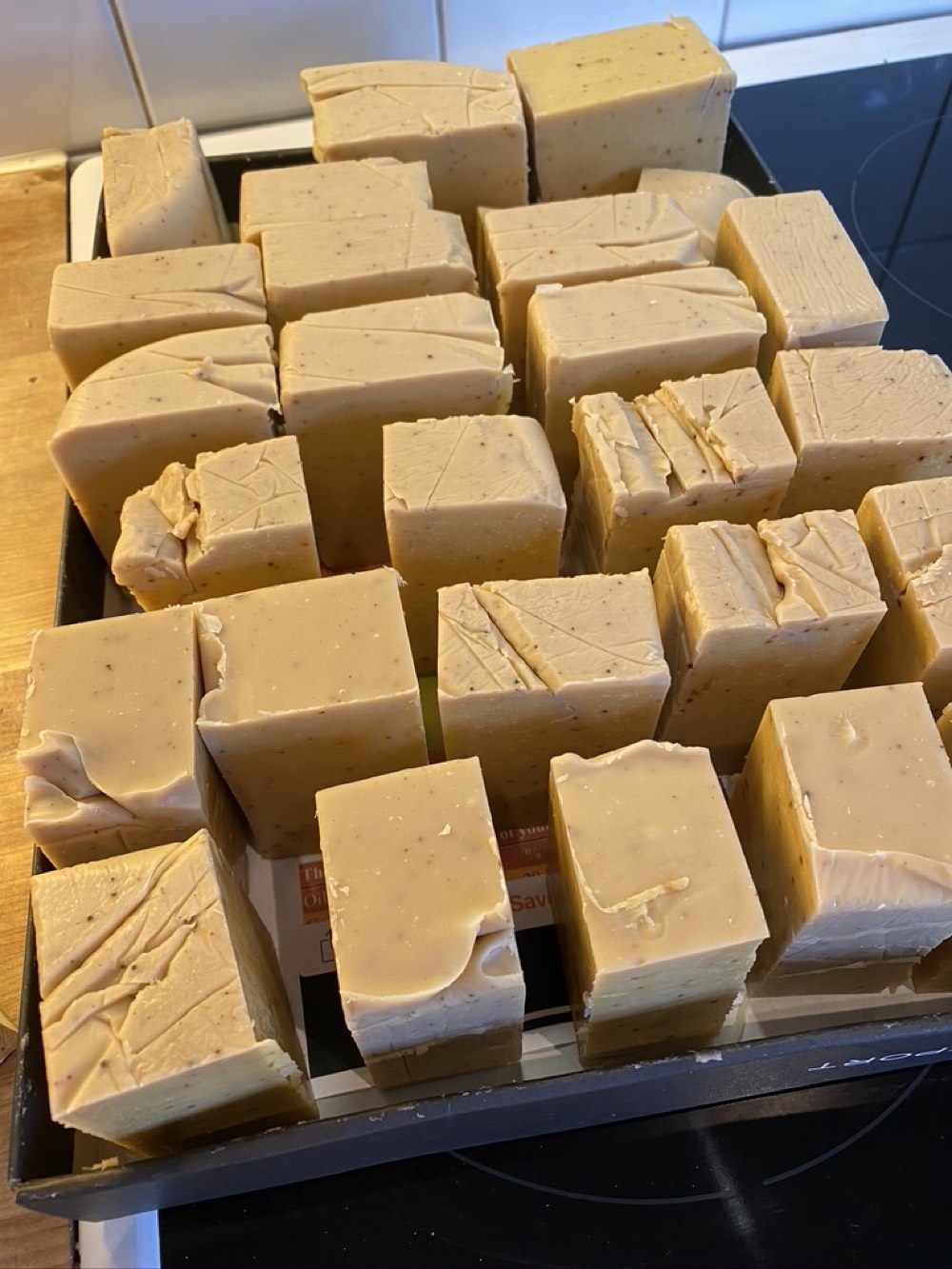
Bar soap
Cold process soap, curing and shaping.
I am new – start here
Do not begin with an advanced formula. Read the safety guidance, follow the PDF guide, calculate every batch in the calculator, then choose a beginner formula.
Tvålkalkylator / Soap calculator
Choose oils, enter your batch size and document the formula. The calculator is designed to be used alongside your own checks of ingredients and alkali purity.
Video / Video
I have extensive soapmaking experience, but my strength lies in the craft and teaching – not video production. That is why I link to clear, professionally made videos from established educators, as a complement to my own texts, recipes and workshops.
Important: the videos are a complement, not a replacement for a lye calculator, safety data sheets or your own small test batches. Liquid soap uses KOH; bar soap uses NaOH.
PDF / Guides
Read at your own pace, save or print. Find support for your first soap and your continuing craft. The PDFs never replace a current lye calculation or safety data sheet.
Peter’s Soap · Soap With Me
I am Peter Öberg and I have been making soap for 15 years. Here I share a calm, knowledgeable craft: carefully chosen ingredients, safe method and soap to genuinely enjoy every day.
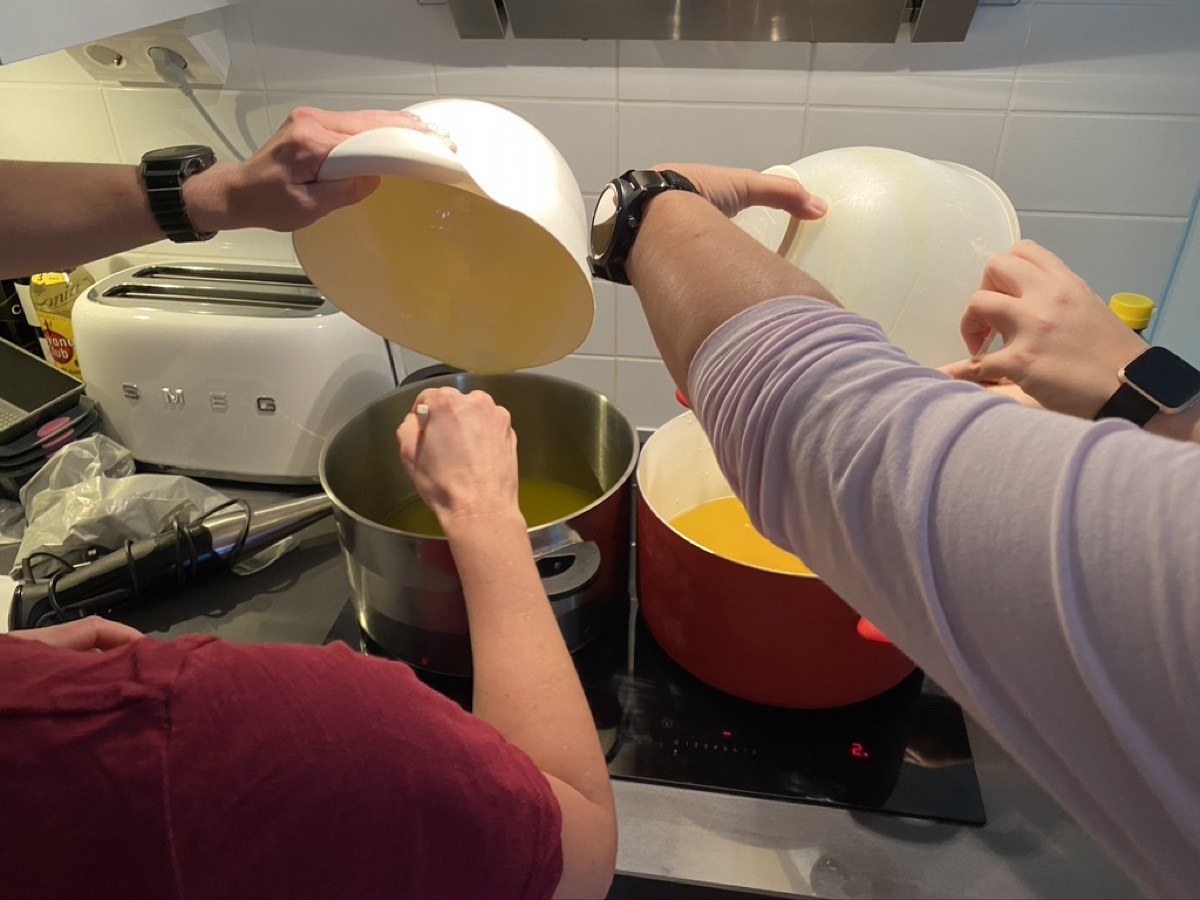
Recently added
New material appears here first. The site is updated when I have something tested, useful and worth sharing.
Every batch begins with thoughtfully selected oils and ingredients. Here I share the process behind bar and liquid soaps – honestly, practically and step by step.
Cold process soap, curing and shaping.
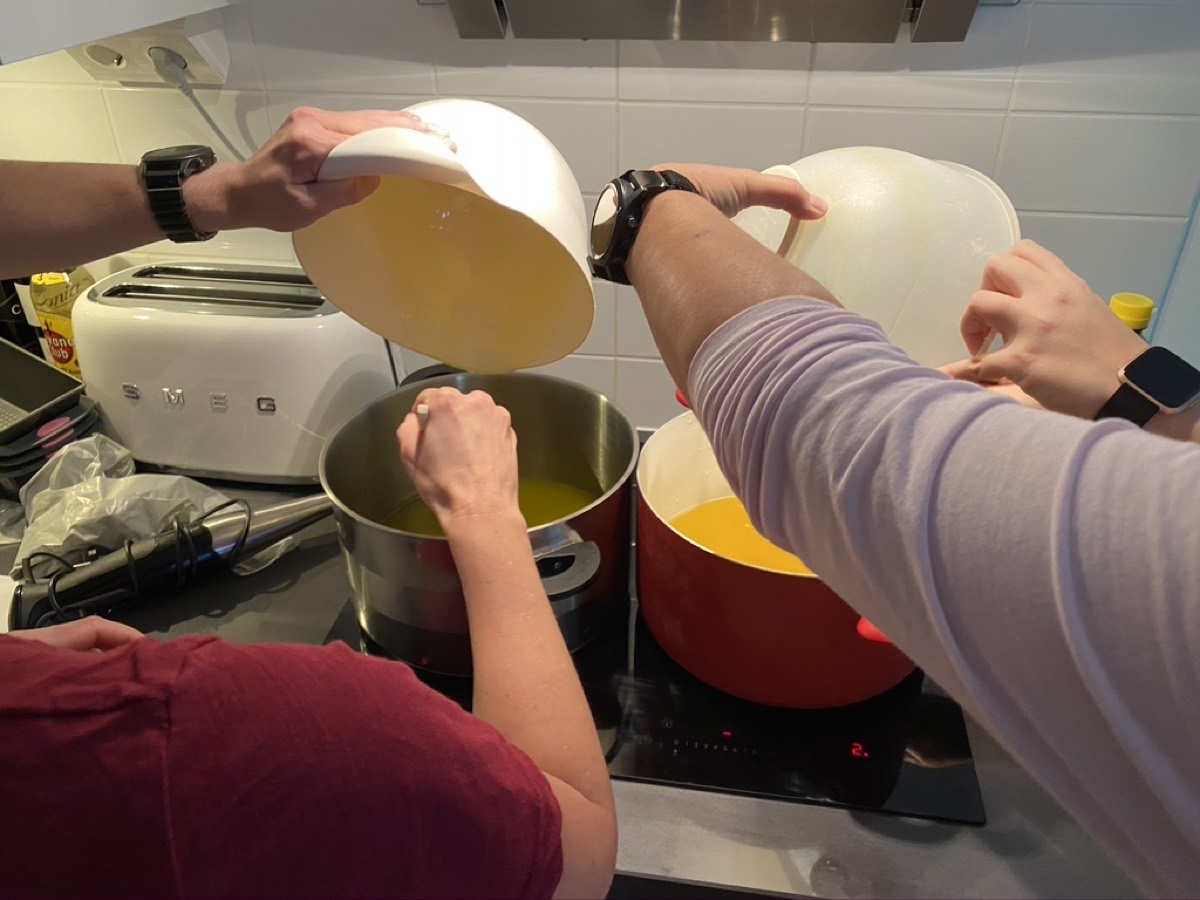
From paste to gentle hand soap.
03
Safety goggles, chemical-resistant gloves, covering clothing and good ventilation are essential. Always add lye to water – never water to lye. Keep children and pets away from the workspace.
Read the safety guide →02 / Recipe library
Clear foundational formulas for people who want to understand ingredients – always with safety information and a lye-calculator check.
The exact hard vegetable fat must be specified before this formula can be used. Please choose the palm-free everyday formula below in the meantime.
Formula factsLevel: beginnerAlkali: NaOHCure: normally 4–6 weeks
I experience a warm everyday soap with soft, calm lather. The silky feel of olive oil meets clean coconut-oil bubbles – simple, honest and lovely to use every day.
Awaiting formula review – not ready for making.
Olive oil 45% · shea butter 20% · coconut oil 20% · rapeseed oil 15%. Calculate NaOH and water at 5% superfat.
Formula factsLevel: beginnerAlkali: NaOHCure: normally 4–6 weeks
I experience a creamy, substantial bar with soft bubbles and a comfortably velvety feel. For me, it turns an ordinary hand wash into a small pause.
Cold-process, unscented soap. Prepare a scale, protective equipment, alkali-safe containers, stick blender and mould. Read the full method before starting.
Calculate this formulaRead the methodOlive oil 40% · coconut oil 25% · shea butter 20% · rapeseed oil 15%. Fragrance-free. Calculate NaOH and water at 5% superfat.
Formula factsLevel: beginnerAlkali: NaOHCure: normally 4–6 weeks
I experience a bright, inviting soap with creamy lather and a fine balance of clean feeling and soft glide. The soap is fragrance-free.
Cold-process, unscented soap. Prepare a scale, protective equipment, alkali-safe containers, stick blender and mould. Read the full method before starting.
Calculate this formulaRead the methodLiquid soap is normally made with KOH, not NaOH. Enter the KOH purity and the lower superfat specified in the recipe into the calculator; check pH and clarity before use.
Formula factsLevel: intermediateAlkali: KOHCheck: pH and clarity
I experience a flowing hand soap that spreads easily over wet hands and rinses clean. It feels soft, simple and practical without becoming anonymous.
Stearic acid 45% · coconut oil 20% · castor oil 15% · shea butter 20%. It creates dense, stable lather and good glide. For a soft shaving soap, NaOH/KOH can be combined, but use a calculator that calculates each alkali separately and enter the purity of each one.
Formula factsLevel: intermediateAlkali: NaOHCure: normally 4–6 weeks
For me, shaving becomes its own ritual: dense, creamy lather carries the blade gently across the skin. I value the structure from stearic acid, the lather stability from castor oil and the velvety glide from shea butter.
Advanced formula: choose only pine tar oil with safety documentation for its intended use and stay within the supplier’s usage limit. Work cool and add the pine tar oil at light trace. It can accelerate the batter very quickly; prepare the mould and pour as soon as the batter is still fluid. Calculate NaOH and water at 5% superfat.
Formula factsLevel: advancedAlkali: NaOHCure: normally 4–6 weeks
I experience a dark, characterful soap with the scent of a dock, wood shed and tarred wooden boat. The base oils shape lather and feel; pine tar oil gives this bar its distinctive, story-like presence.
Use fully flat, well chilled beer in place of water and calculate NaOH at 5% superfat. The sugars in beer can contribute to livelier lather, but also make the batch heat up and darken. Freeze the beer to a slush before adding lye. We do not claim that B vitamins in beer give any special skin benefit in finished soap.
Formula factsLevel: advancedAlkali: NaOHCure: normally 4–6 weeks
I experience a rustic soap with a warm colour and livelier bubbles from beer sugar. For me, it is a conversation between kitchen and soap workshop – a simple ingredient with surprisingly vivid lather.
Coconut oil 80% · olive oil 15% · castor oil 5%. Add fine, clean sea salt equal to 50% of the oil weight at light trace. The high coconut-oil level is an exception: calculate NaOH at 15–20% superfat, use individual cavity moulds or cut very early, and cure for at least four weeks. Always test whether your own finished bar floats in salt water – that cannot be promised from the formula alone.
Formula factsLevel: advancedAlkali: NaOHCure: at least 4 weeks
I experience a very hard bar with dense, creamy lather rather than big bubbles. It is a distinct soap – sea salt, coconut and a firm, almost polished feeling in the hand.
Household formula, not skin soap: coconut oil 100%. Calculate the liquid soap with KOH, the actual KOH purity and 0% superfat in a calculator. Allow the paste to fully saponify, dilute gradually and label it clearly for dishes and laundry. Do not overdose and always follow the appliance manufacturer’s instructions.
Formula factsLevel: householdAlkali: KOHUse: surfaces, dishes and laundry – not skin
I value the strong, clean degreasing power in the kitchen and laundry room. Coconut oil brings lather and cleaning strength, but that is exactly why it belongs on dishes, textiles and surfaces – not as a mild body soap. Making a concentrated soap with few ingredients can reduce unnecessary additives and single-use packaging, but it is not automatically environmentally preferable: dose, ingredient origin and release into water always matter.
Find the right formula
Each formula includes facts about level, alkali type and cure. Always use Peter’s Soap Calculator before weighing your own batch.
In depth
Understand why formulas work. Explore chemistry, ingredients, methods and help when a batch does not go to plan.
Jump to a topic
Questions from the workshop
Short, honest answers to common questions. If in doubt: pause, read the safety guide and check the calculator before weighing anything.
Yes. Classic soap forms when oils or fats react with alkali. Bar soap uses NaOH, while liquid soap or soft soap uses KOH. With a correctly calculated formula and proper cure, free alkali is not present in the way it is during making.
No. Oils and alkali have different densities, and lye calculation requires grams. A gram-accurate scale is basic equipment.
Each oil has its own saponification value. A calculator determines how much alkali your specific oil blend needs, accounting for superfat and alkali purity.
Cure allows water to evaporate and normally makes the bar harder, gentler in feel and longer-lasting in the shower. For many cold-process soaps, 4–6 weeks is a sound starting point.
Yes, but never without recalculating the whole formula. A swap changes both the alkali amount and the soap’s properties.
The batter has emulsified and begins to leave a briefly visible ribbon on the surface. This is often the point for considered colours or controlled additions before pouring into the mould.
Yes. Liquid soap and soft soap are normally calculated with potassium hydroxide, KOH. NaOH and KOH are not interchangeable in a formula.
If alkali feels uncertain, if you want to understand the calculator calmly or if you want support through a solid first batch, a workshop is a sensible route.
Kalkylator / Calculator
Choose your oils, set the formula to 100% and create a clean printout. The calculator follows the same basic approach as established tools: NaOH for bar soap and KOH for liquid soap. Always check SAP values and actual alkali purity before weighing.
Compare in the Bramble Berry calculator ↗Calculated result
Select oils totalling 100%, a positive batch size and water ratio, actual alkali purity (above 0 to 100%) and superfat (0 to below 100%).The printout contains only selected oils, alkali, water and your notes. Choose “Save as PDF” in the browser print dialog.
Öbergs tvål · soap calculator
________________________________________________________________________________ ________________________________________________________________________________ ________________________________________________________________________________
Peter’s Soap Calculator
Once you have calculated your formula, choose the instructions by alkali: NaOH means bar soap, while KOH means liquid soap or soft soap. Print the relevant guide and keep it with your formula printout.
Cold process, hot process or CPOP. The guide covers lye solution and trace through moulding, cutting and cure.
Work to a soap paste and dilute in stages. The method guide explains the principles and safety boundaries.
Öbergs tvål · work guide
This working order complements the calculator printout. Work only from a verified lye formula, correct protective equipment and ingredient safety data sheets.
KOH, dilution, clarity and pH need a dedicated method. Use the calculator’s KOH setting, follow a verified method for paste and dilution with distilled water, and always assess the finished soap before use.
Important boundary: This guide is support, not a replacement for independently checking the lye calculation, ingredients or safety routine.
In depth / Deep chemistry
An oil is largely made of triglycerides: three fatty acids bound to a glycerol molecule. When an alkali solution meets the oil, those bonds are broken. The fatty acids gain a new partner – sodium in bar soap or potassium in liquid soap and soft soap – while glycerin remains in the finished soap.
This is what makes soap a salt of fatty acids. Its water-loving end can interact with water, while its oil-loving part gathers oil and dirt. During rinsing, small structures called micelles can carry oil away from skin or a surface.
Continue to fatty acids and iodine value ↘Fettsyror / Fatty acids
Oils are mixtures of different fatty acids. Their composition largely affects how a soap behaves in the mould, cures and lathers. The values help explain the whole – they are not grades of whether a soap is good or bad.
Iodine value measures unsaturation: the grams of iodine that can bind to 100 grams of oil. A higher value generally means more double bonds and greater sensitivity to oxidation. It does not say how “good” a soap will be, and never replaces an actual stability assessment.
In a lye calculator, iodine value is therefore a signal to interpret alongside the entire fatty-acid profile, superfat, additions, ingredient freshness and cure. Linseed oil especially deserves respect: it can create a wonderful character, but requires care in percentage, storage and small test batches.
Where is it found? Palmitic and stearic acid
Often contribute to a firmer bar and denser, creamier lather.
Where is it found? Mainly coconut and palm-kernel oil
Give easier, more bubbly lather and cleansing power. Balance matters because a high level can feel more stripping.
Where is it found? Olive, avocado, rapeseed and many other oils
Gives a calmer, softer character and can make a batter slower to work with.
Where is it found? Sunflower, linseed and some other seed oils
Contribute a soft, distinctive character but are more oxidation-prone. Fresh oils and thoughtful storage matter.
Where is it found? Castor oil
Usually used in a smaller percentage to help lather hold together.
Start here
A clear path for beginners. Start with step 1 and return here when you are ready to continue.
Read the safety guidance and prepare a scale, protection and suitable containers before buying or weighing ingredients.
Read the preparation guide →Start with an unscented base formula. Read the full method and recalculate whenever you change an oil.
Choose a base formula →List the exact oils and equipment. Check alkali purity and the supplier’s safety data sheet.
Explore ingredients →Open the selected formula in the calculator. Choose batch size, enter actual alkali purity and cross-check before weighing.
Calculate the everyday formula →Keep the formula printout and method guide beside you. Prepare the workspace and follow one step at a time.
Follow the method →Record the batch date and follow the formula’s cure time. Curing cannot correct a miscalculated formula. Ask for help if the result is uncertain.
Read about troubleshooting →04 / Ingredients with intention
A soap does not need fragrance to be interesting. I use additions for feel, colour and story – always with respect for the ingredient and the person using the soap.
Finely milled oats can create a softer, creamier feel in lather.
Kaolin can bring natural colour, a silky feel and structure to shaving soap. Rhassoul, also called ghassoul, brings a warm earth tone and a distinct mineral character.
Calendula, lavender and rose petals can add character. Plant material often darkens in finished soap – let that be part of the honesty of the craft.
They change lather, hardness and working behaviour. Every addition needs a formulation of its own.
A considered mould can create a bar that sits well in the hand and lasts longer. Custom moulds and embossed surfaces are an exciting field where skilled designers and 3D-print makers can contribute their own expertise.
05 / Work safely
Safety goggles, chemical-resistant gloves, covering clothing and good ventilation are essential. Always add lye to water – never water to lye. Keep children and pets away from the workspace.
Safety reference ↗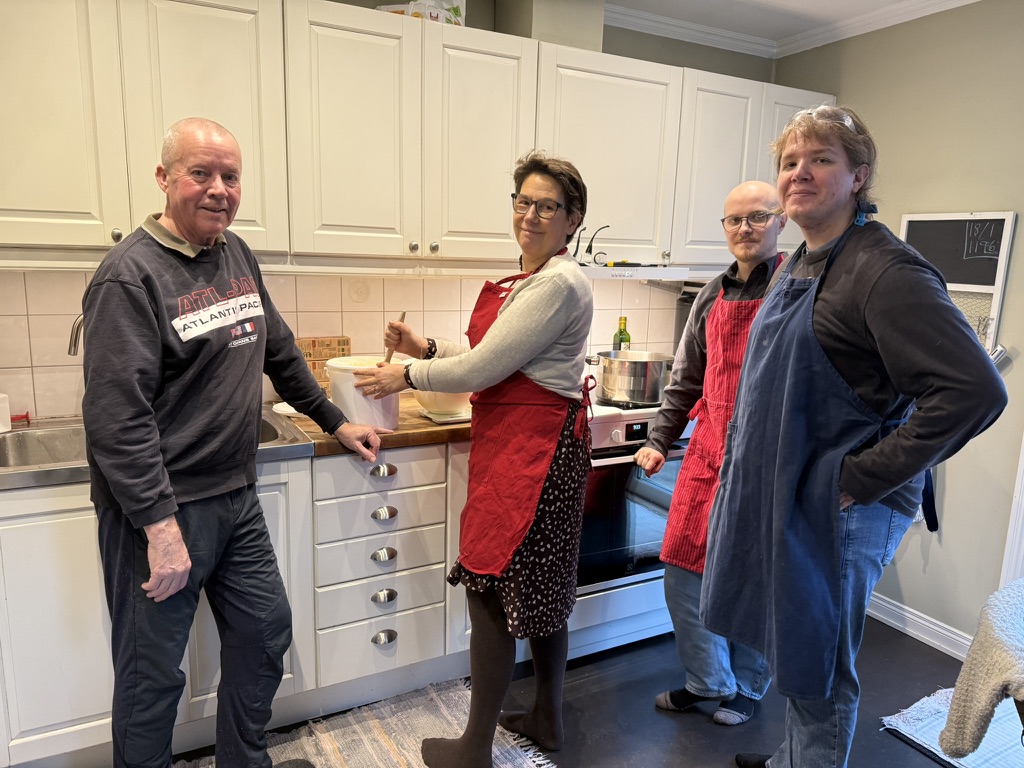
05 / About me
I have made soap for 15 years. I am self-taught and have led many workshops, both privately and publicly. Peter’s Soap · Soap With Me is my living story of ingredients, precision, form and the pleasure of sharing knowledge.
I do not make soap to be artistically beautiful. I make good, dependable soap. Other soapmakers create extraordinarily beautiful bars, and I greatly admire their work.
Fragrance is a personal choice. I never use fragrance oils or essential oils in my soaps, because quality can vary and strong scents can be unsuitable for people with sensitivities or allergies. Here, the ingredients and the clean feeling speak for themselves.
Tar soap is my exception. I use pine tar oil, which gives it the smoky, deep scent of a tarred wooden boat. It is cherished in Sweden and Finland. Tar has a long history in folk remedies for hair and skin, but tar soap is not a substitute for medical advice or treatment for eczema, dandruff or other conditions.
06 / Shaving soap
Shaving soap has an obvious place here. Many men seek classic, dense lather for face and chin, but this soap is for anyone who wants to make shaving calmer and more considered.
I find that a good shaving soap changes the moment itself: the brush builds creamy lather, the blade gains glide and an ordinary morning becomes a craft. Stearic acid brings backbone, castor oil holds the lather together and shea butter contributes a smooth feel.
See the shaving-soap formulaEvery morning I shower with my own soap. I shave with my own soap. I clean with my own cleaning soap and wash dishes with my own dish soap. I enjoy my own soap – every day.
07 / The history of soap
Soap began with a very practical need: removing grease and dirt from bodies, textiles and tools. No single person invented it. Saponification – the meeting of fat and alkali – was discovered in more than one place and time.
Before soap, people washed with water, friction and locally available materials. In the Mediterranean, oil was often applied and then scraped away with a strigil.
The earliest written evidence comes from Mesopotamia and includes cleaning wool and textiles. Ash from wood and certain plants made alkaline solutions that could loosen dirt and grease.
Aleppo soap is a living Syrian craft based on olive oil and laurel berry oil. UNESCO added the craftsmanship of Aleppo ghar soap to its Intangible Cultural Heritage list in 2024.
Industrialisation made soap an everyday product in great volume. Today, industrial products exist alongside a curious revival of small-batch soapmaking, where ingredients, formulas and method can be visible again.
Sources: British Museum, Smithsonian and UNESCO.Historia fortsätter / Then and now
In everyday language, many solid and liquid cleansers are called soap. Chemically, a classic bar soap is a sodium or potassium salt of fatty acids, formed when oils or fats react with alkali. That is the process behind my handcrafted soap.
Synthetic cleansing products - often called syndets - use surfactants other than fatty-acid salts. They can be made from feedstocks derived from both plant oils and petrochemical sources, and can be formulated for hard water, particular lather or a lower pH. They are not automatically inferior or harmful; they are a different product category with different properties.
My path is transparency: I want to show which oils are used, how they are saponified and what they contribute to a finished bar. A well-made handcrafted soap and a well-formulated syndet product can both serve their purpose. The difference lies in the ingredients, chemistry and the experience one seeks - not in a simple claim that one is always best.
Sources: FDA, Frequently Asked Questions on Soap; EU Regulation (EC) No 648/2004 on detergents; American Cleaning Institute.07 / Linseed soap – from kitchen to deck
Linseed soap is fundamentally a potassium soap: linseed oil is saponified with potassium hydroxide (KOH). It can be used for household cleaning and as a gentle part of a wood-care routine.
Cleaning: formulate at 0% superfat and always calculate KOH, liquid and the actual KOH purity in a soap calculator. Label the product for surfaces – not skin.
Wood: a more fatty soap may be used as part of maintenance for already treated wood. Follow the wood and finish manufacturer’s instructions; soap does not replace a wood preservative.
Important: an underfatted soap means an excess of alkali. It can irritate or damage skin and should not be published as a home recipe without professional quality assurance.
Sources: Swedish Chemicals Agency, Bona and potassium-soap documentation.08 / Choose your path
Whether you are a beginner or want to dive deep into chemistry, there is a path into the craft.
09 / Knowledge library
Kemi / Chemistry
Soap is a salt of fatty acids. When the triglycerides in oils and fats react with alkali, they split: glycerin remains in the soap and fatty acids bind to sodium or potassium. Sodium hydroxide, NaOH, creates bar soap. Potassium hydroxide, KOH, is used for liquid soap and soft soap. Each oil has its own saponification value – the amount of alkali needed to react with that particular oil. This is why every formula must be calculated in a soap calculator.
Lexikon / Glossary
Trace is when soap batter thickens and a drizzle remains visible on the surface. Superfatting means deliberately using slightly less alkali, leaving a small portion of oil unsaponified. Gel phase is a warm stage in the mould that can make colour and surface more even. Saponification value is the key to a correct alkali calculation for each individual oil.
Felsökning / Troubleshooting
Soda ash is a harmless, matt surface that can occur when soap reacts with air. Cracks are often caused by excess heat. Soft soap may need a longer cure, or may contain too much water. When a batter traces too quickly, temperature, formula, fragrance or additions are common explanations. Change one thing at a time and always record temperatures, ingredients and times.
Vardag / Everyday use
A bar lasts longest when it can dry between uses. Choose a draining soap dish, do not leave the bar in water, and let different bars take turns if you can. For shaving, a brush and a little patience make a real difference: build the lather gradually with water until it feels dense, soft and slick. A well-cured bar is usually harder, lasts longer and feels more pleasant in daily use.
Råvaror / Ingredients
Coconut oil contributes cleansing power and lather, while olive oil gives a milder, creamier character. Castor oil can stabilise lather. Shea butter contributes body and feel. Clay, oats, herbs and salt are additions that affect both working method and experience. Choose traceable ingredients, use suitable amounts and always check each ingredient's safety before it goes into a product intended for skin.
10 / Selling soap in Sweden
Cosmetic soap cannot be sold without meeting the rules. There is no Swedish pre-approval process, but before sale the responsible person must be able to demonstrate that the product is safe and complies with EU cosmetics rules. This includes a safety report, product information documentation, notification through the EU CPNP portal and correct Swedish labelling. The Swedish Medical Products Agency is the supervisory authority, and cosmetic claims must be substantiated.
Read the Swedish Medical Products Agency guidance ↗11 / Contact
Would you like to book me for an event or a soapmaking workshop? Please get in touch below.
What you take away
A workshop should offer more than a pleasant afternoon. The aim is for you to understand what you are doing, ask the right questions and continue at home with respect for both chemistry and craft.
Boka / Book
I have led many workshops, both privately and publicly. Here you get a calm, practical introduction to soapmaking – from safety and ingredients to your own first batch.
For anyone who has never made soap, or wants a safe fresh start.
A hands-on craft session for friends, a group or a workplace.
For makers who want to understand formulas, oils and method in more depth.
We use a short guide, read what matters, make soap together and document the result. You can use the site’s PDF guides, calculator and formulas as support afterwards.
Your details are used only to respond to your booking enquiry.
12 / Methods & guides
Three methods for bar soap, one separate method for liquid soap, and one clear rule: a safe formula always begins with the correct alkali, a current calculator and careful records.
Verifierat receptspår / Verified recipe path
African black soap is not one standard formula. Traditions vary by region and often use plant ash, such as plantain peel or cocoa pod ash, together with local oils and butters. The alkali strength of ash cannot be known without analysis. I therefore do not publish a home formula that replaces measured lye with unknown ash. The safe, controllable route is to use traceable, pre-made African black soap as an ingredient in a cold-process or rebatch formula, and always calculate the new base's NaOH separately. Bramble Berry documents the regional variation and use of finished African black soap in its materials.
Source: tradition and production ↗Peters recept / Peter’s formula
This is my own formula, inspired by traditions in which plant ash is used in soap. It does not claim to be one single traditional African black-soap recipe.
Base oils: castor oil 15% · coconut oil 24% · shea butter 61%. Always calculate NaOH, liquid and superfat in a current soap calculator for the exact batch. I roast plantain peels in the oven, then burn them to a fine ash and allow the ash to cool completely. Once the lye solution has been mixed into the oils and the batter is at light trace, I sift in the ash and stir gently before pouring into the mould.
Here, the ash is a colour and texture component, not a substitute measure for lye. Ash composition varies and can contain alkaline compounds; I therefore use only small, carefully documented test amounts, sift it finely, and do not alter the lye calculation without verified analysis. Coarser ash can give a mild scrub-like feel, while finer ash gives a more even charcoal-grey tone.
I love how the ash makes this soap its own: charcoal-grey, rustic and alive at the surface. With fine sifting it becomes softer in expression; with a little more texture it gains a discreet, handmade character.
Source: plant ash and soap traditions ↗CPOP / Peter Öbergs variant
When I make CPOP, I begin with a cold-process batter in an oven-safe mould. The mould stays at about 65 °C for roughly two hours. I then turn the oven off and leave the mould inside overnight in the residual heat. This is my gentle, controlled variation – not a universal temperature rule. Formula, mould, batch size and additions can develop heat differently. I therefore monitor the process closely, avoid sealed moulds, and still allow CPOP soap to cure properly after unmoulding.
Källor / Sources
I use open, established sources as inspiration for oil percentages and method – but I never publish an alkali amount without first calculating it in a current calculator with the actual ingredient and purity. The sources below are reading material, not a replacement for that check.
Från verkstaden / From the workshop
There are no shortcuts here: ingredients are weighed, oils are warmed gently, the batter is watched and the soap is allowed to rest. These photographs show the everyday process behind the formulas.
Börja göra tvål / Start making soap
This is my introduction for anyone who wants to start making bar soap. Do not begin with an advanced formula. Begin by understanding safety, ingredients and what happens in the batter - then every new batch becomes a step forward.
A gram-accurate scale, heat- and alkali-safe containers, stick blender, silicone spatula, mould, safety goggles and chemical-resistant gloves. Avoid aluminium.
Bar soap is calculated with NaOH. Work with ventilation, protection and an undisturbed workspace. Always add alkali to water - never water to alkali.
Every oil has its own saponification value. Coconut oil contributes lather, olive oil a softer character and shea butter body. Always let the calculator determine alkali and liquid.
Weigh ingredients, safely mix the alkali solution, combine it with the oils, stick blend to light trace, pour into a mould and then cure the soap. Record temperatures, times and results.
Cold process is formable and normally needs 4-6 weeks of cure. Hot process is rustic and can be used sooner. CPOP uses low oven heat for a controlled gel phase but still needs drying and cure.
Choose a simple, well-documented formula with clearly specified oils. Use 5% superfat for bar soap as a starting point and change only one thing at a time between batches.
Praktisk metod / Practical method
This is the part of the craft where calm, temperature control and good notes make the greatest difference. Always work from a current calculator result and keep the ingredient safety data sheets close by.
Peters recept / Peter’s formulas
These formulas come from my course material. They are published only as percentages of the total oil weight. Always calculate NaOH, liquid, superfat and actual lye purity in a current soap calculator for your exact batch – never use an old screenshot as a lye recipe.
Avocado oil 5% · rapeseed oil 5% · castor oil 5% · coconut oil 25% · olive oil 25% · palm oil 15% · shea butter 20%
I experience a full-bodied, well-balanced soap where coconut-oil bubbles meet the creamier character of olive oil, shea butter and palm oil.
Avocado oil 5% · castor oil 5% · coconut oil 25% · olive oil 35% · sesame oil 10% · shea butter 20%
I enjoy how olive oil, sesame oil and shea butter create a calm, supple whole, while coconut and castor keep the lather alive.
Castor oil 5% · coconut oil 25% · linseed oil 15% · olive oil 20% · shea butter 25% · avocado oil 10%
For me, this is a distinctly creamy soap: shea butter and avocado add body, while linseed oil makes the character more distinctive and less driven by large bubbles.
Avocado oil 5% · castor oil 5% · coconut oil 25% · olive oil 35% · shea butter 20% · sunflower oil 10%
I experience the sunflower variation as lighter and softer in character, with the same calm foundation but its own note from sunflower oil.
Castor oil 15% · coconut oil 24% · shea butter 61%
This is my own white formula with a high proportion of shea butter, rich and dense in feel. The name describes my inspiration – it is not a claim to be a traditional African black-soap recipe.
Castor oil 5% · coconut oil 20% · linseed oil 40% · palm oil 10% · shea butter 25%
I appreciate the calm, creamy direction created by the high proportion of linseed oil. I make small batches and work with fresh, well-stored ingredients because linseed oil is prone to oxidation.
Fördjupning / In depth
Oils should not be ranked as good or bad. They are building blocks with different fatty-acid profiles, working behaviour and shelf life. Percentage and the complete formula always matter more than any single ingredient.
I choose fine ingredients with care and use high-quality organic oils where they are available. Palm oil is rightly questioned: cultivation can be linked to deforestation and other serious consequences. When I use palm oil, I choose organic oil with clear traceability and check the supplier’s documentation. In a well-balanced soap, it can contribute hardness, stability and satisfying, creamy lather.
Adds hardness, cleansing and bubbly lather. At high percentages it can become more cleansing, so balance with superfat and other oils matters.
Gives a calmer, creamier character and can make a slower-moving batter. It is a fine foundation when you want time to work.
Used in a smaller percentage to help lather hold together. Too much can make a batter tacky or overly soft.
Adds body and a creamy feel. It is a solid fat and should be fully melted and evenly mixed before portioning.
Palm oil can add hardness and stability, while palm kernel oil behaves more like coconut oil with cleansing and lather. Choose traceable materials and check origin and certification.
Gives a soft, distinctive character but is rich in polyunsaturated fatty acids. Keep the percentage considered, use fresh oil and store both oil and finished soap cool and dark.
Lödderprofil / Lather profile
The table isolates each oil’s usual contribution to lather. “Bubbly” means larger, airier bubbles; “creamy” means denser, finer lather. The result in a finished soap always depends on the complete formula, percentage, superfat, method and cure time.
| Oil / butter | Bubbly lather | Creamy lather | In brief |
|---|---|---|---|
| Kokosolja / Coconut | High | Low | Bubbles and cleansing |
| Palmkärnolja / Palm kernel | High | Medium | Bubbles, hardness and structure |
| Ricinolja / Castor | Stabilises | High | Helps lather hold together |
| Olivolja / Olive | Low | Medium | Calm, mild character |
| Sheasmör / Shea | Low | High | Body and denser lather |
| Palmolja / Palm | Low | High | Hardness, stability and creaminess |
| Avokadoolja / Avocado | Low | Medium | A softer, richer whole |
| Rapsolja / Rapeseed | Low | Low–medium | Soft character in balance |
| Solrosolja / Sunflower | Low | Low–medium | Light, soft whole |
| Sesamolja / Sesame | Low | Medium | Soft, supple character |
| Linfröolja / Linseed | Low | Medium | Distinctive, calm creaminess |